What Are Cookies Internet in 2026? What Searchers Usually Mean, Uses, and 7 Live Checks
The real value in what are cookies internet shows up when you debug it like a live system. A banner can render perfectly and still leak requests, misfire tags, or drift after the next plugin or theme update.
The useful test for what are cookies internet is whether the live stack behaves correctly before consent, after consent, and after the next deployment. That is how hidden leaks and timing mistakes show up.
People usually want to know:
- what cookies actually are;
- what websites use them for;
- whether they are only for tracking; and
- when consent, opt-out, or browser settings are supposed to change what happens on the live site.
If you want the closest companion reads first, start with these guides to what is a cookie internet, browser cookies, and cookie tracker. This page stays focused on the search phrase what are cookies internet and the practical review a privacy, product, or marketing team should run this week.
If your team is trying to get what are cookies internet under control without adding a heavyweight privacy stack, DataShyre can help. DataShyre focuses on consent and preference management that are easier to implement, easier to operate, and easier to trust on a live site. Start with DataShyre’s consent and preference management or book a demo.
If your team needs help connecting cookie disclosures, consent controls, and live browser behavior into one system, DataShyre can help with consent management, data mapping, and implementation support that keeps the runtime aligned with the policy layer.
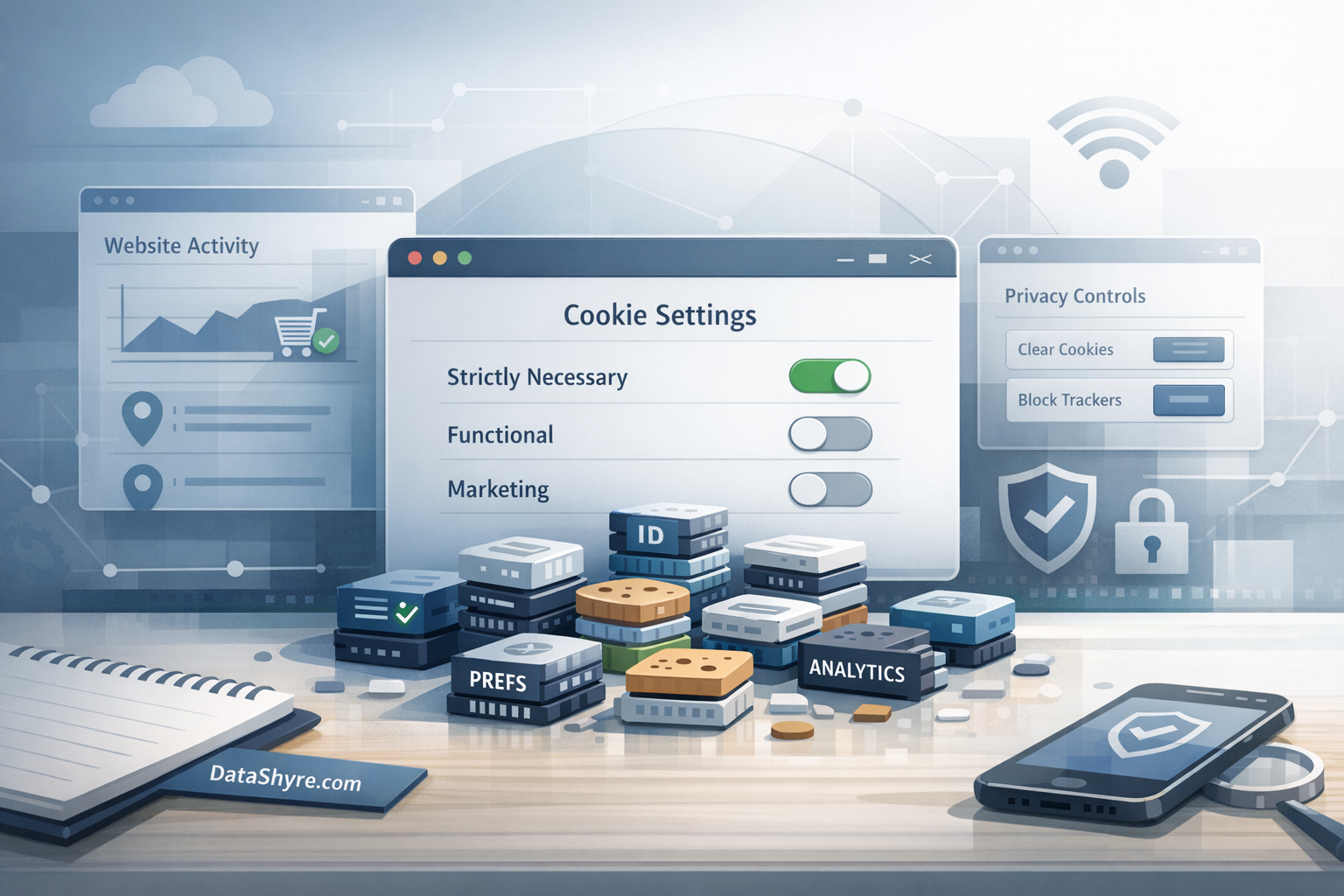
1. In plain English, internet cookies are small pieces of browser memory
The cleanest answer to what are cookies internet is not complicated.
MDN’s current HTTP cookie guide says a cookie is a small piece of data a server sends to a user’s web browser. The browser can store it and send it back later with later requests.
That lets a website remember things like:
- that you are signed in;
- what is in a shopping cart;
- which language or region you selected;
- whether you already dismissed a notice; or
- which settings you chose on an earlier visit.
So if someone asks what are cookies internet, the plain-English answer is:
they are browser-side memory that helps a website recognize state later.
2. The file itself is not the whole story; the purpose is
The technical mechanism is simple.
A server can send a Set-Cookie header, the browser stores the value under certain rules, and the browser may later return it in a Cookie header. That is one reason cookies became so common on the internet in the first place: HTTP is stateless, so websites needed a practical way to remember continuity between requests.
But for most real reviews, the useful question is not only what is the file.
It is what purpose does this cookie support.
That purpose is what separates:
- a sign-in or checkout session cookie;
- a preference cookie for language or display choices;
- an analytics cookie; and
- an advertising or profiling cookie tied to broader tracking.
That is also why a cookie explainer that stops at small text file is incomplete.
3. Not all internet cookies are tracking cookies
This is where the search phrase usually needs the most cleanup.
Some internet cookies support basic functionality. Others support measurement, personalization, or advertising. Your Europe still says that, depending on purpose, some cookies require consent before use, while others may fall into limited exceptions. It also says users should receive clear and comprehensive information about cookies that require consent and their purpose.
So when you hear what are cookies internet, split the answer into at least four buckets:
- necessary or security cookies;
- preference cookies;
- analytics cookies; and
- advertising or cross-context tracking cookies.
That simple sorting step usually makes the compliance and implementation questions much easier.
4. Browser changes changed the environment, not the concept
One common mistake is assuming modern browsers made cookies irrelevant.
They did not.
Firefox’s current support documentation still says cross-site tracking cookies are disabled by default for Firefox users. That matters because the 2026 question is not only do cookies exist.
It is also:
- which cookies appear under current browser defaults;
- whether they are first-party or third-party;
- whether the site still works when cross-site tracking is constrained; and
- whether the privacy copy matches what the browser actually shows.
So what are cookies internet is partly a browser-behavior question, not only a legal or marketing question.
5. Consent rules are really purpose-and-region rules
This is where the search phrase stops being a definition and becomes a workflow.
For EU- and UK-facing experiences, Your Europe says cookies that require consent can only be set after the user has consented, and the ICO’s current guidance reaches beyond classic cookies into similar technologies, including tracking pixels and related storage-and-access tools.
For California-facing experiences, the practical question often changes. The California Department of Justice still says valid Global Privacy Control signals must be honored where the law applies.
That means a real what are cookies internet review should ask:
- which cookies appear before any choice;
- which ones depend on prior consent in the relevant region;
- whether the banner, preference center, and runtime tell the same story; and
- whether California opt-out or signal handling actually changes downstream behavior where required.
This is usually the point where a site moves from we show a cookie banner to we actually control cookie behavior.
6. Internet cookies are also a security settings problem
Not every cookie issue is a consent issue.
Some are basic security hygiene.
Sensitive cookies that support sign-in or account continuity should be reviewed for how they are scoped, how long they last, and whether the obvious protective attributes are present. Even on sites where the privacy notice is polished, weak cookie settings can still create avoidable risk.
So a useful live review checks at least:
- whether session-related cookies are deliberate rather than leftover defaults;
- whether sensitive cookies are limited to the right paths or hostnames;
- whether their lifetime makes sense for the purpose;
- whether the site still depends on old cross-site cookie assumptions; and
- whether the policy layer says anything stronger than the runtime can support.
Privacy drift and security drift often appear together.
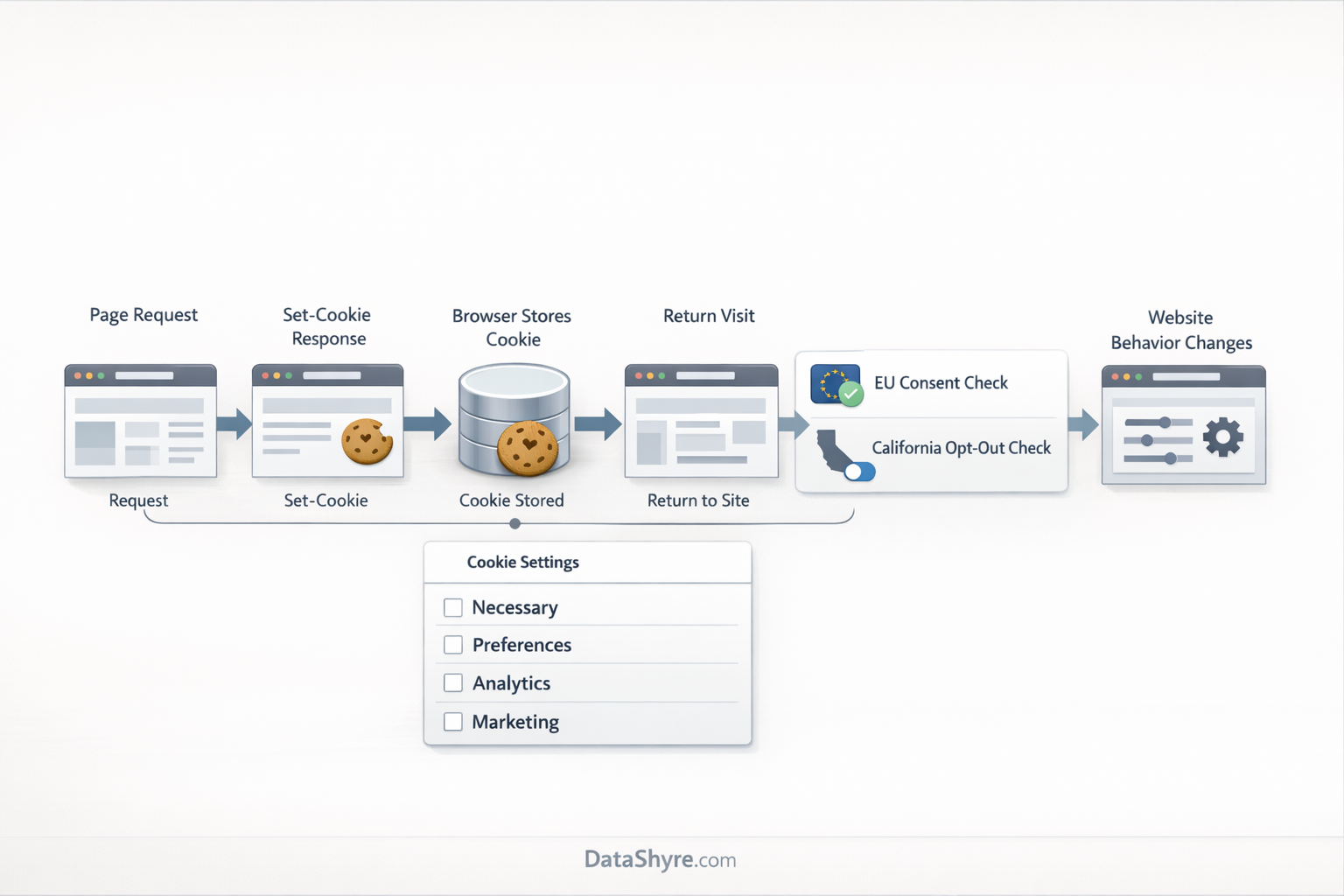
7. The fastest useful answer is to test the live site
The strongest answer to what are cookies internet is operational.
If you were reviewing a live site this week, use this order:
- load the site in a clean browser state;
- inspect what cookies and related storage appear before any choice;
- group the findings into necessary, preference, analytics, and advertising uses;
- compare the no-choice, reject, accept, and later-withdrawal states;
- test California opt-out or GPC handling where relevant;
- check sensitive cookie settings on login or account flows; and
- compare the live findings against the cookie notice, privacy policy, and vendor list.
That sequence answers the real question much faster than debating the search phrase alone.
FAQ
Are internet cookies the same thing as browser cookies?
Usually, yes in everyday usage. When people search what are cookies internet, they normally mean the browser cookie mechanism websites use to remember state across requests.
Are all internet cookies used for tracking?
No. Some support sessions, security, carts, or preferences. The higher-risk branch is usually optional analytics, advertising, personalization, or cross-context recognition.
Do all internet cookies need consent?
The fastest way to judge what are cookies internet is to test it the way a broken deployment would expose it: before consent, after consent, and again after a stack change.